All Categories
Featured

Table of Contents
- – Selecting The Best Option For Pennsylvania Sola...
- – Which Permitting And Insurance Standards Shoul...
- – How Do You Calculate Your 85–100% Annual Usage...
- – How Should You Verify The Technical Competence...
- – Does Your Solar Panel Installation Require The...
- – Does Your House Qualify For A Professional Sol...
Selecting The Best Option For Pennsylvania Solar Panel Installation Companies
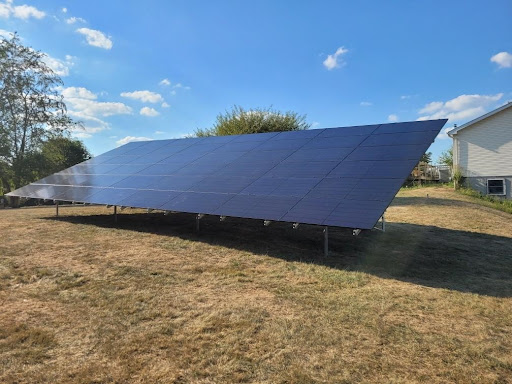
When you assess Pennsylvania Solar Panel Installation Companies, you must prioritize technical vetting and financial transparency to safeguard your long-term investment. With the typical price per watt currently sitting at approximately $2.58, selecting the right partner is the most efficient way to ensure your project stays within the $12,891 to $38,155 price range. You should exclusively target an installer who holds a valid NABCEP license, as this credential serves as the sector standard for verifying professional expertise and design precision. By concentrating on these specific efficiency and verification metrics, you will eliminate unreliable service providers from your list. This article provides you with the definitive criteria required to recognize and hire a reputable professional for your residential energy project.
“Lumina Solar embraces innovation, pushing the boundaries of what's possible in energy storage.” — Lumina Solar PA
Which Permitting And Insurance Standards Should You Use To Rank Pennsylvania Solar Panel Installation Businesses?
Pennsylvania Solar Panel Installation Companies evaluate based on their adherence to strict professional standards, specifically their ability to provide documented proof of state-mandated licensing and thorough insurance coverage. A legitimate solar vendor must possess active electrical or general contractor licenses valid within your specific municipality and maintain both general liability and workers' compensation insurance to protect your property and personnel during the solar system installation.
“The state requires proof of workmen's compensation on the contractor (if the contractor has employees) or a signed and notarized Workers' Comp Exemption Form.” — lowersouthamptontownship.org
When you vet potential partners, you must ensure they keep the following documentation to ensure your project remains aligned with local regulations and protected against liability:
- Electrical Contractor License: Ensures the solar company is legally authorized to perform grid interconnection and electrical wiring for your system.
- General Liability Insurance: Safeguards your home and property from damage caused during the physical installation process.
- Workers' Compensation Coverage: Guards you from financial and legal responsibility if an installer is injured while working on your roof.
- Permitting Proficiency: Verifies that the installer handles all required local building permits and utility interconnection filings on your behalf.
You can validate these credentials by asking for a Certificate of Insurance and the specific state license number from each candidate. Once you receive these documents, cross-reference the license status with your state’s contractor registry or local building department to confirm the credentials remain in good standing.
Request an revised copy of the installer’s current insurance certificate and verify the expiration dates align with your projected installation timeline before executing any service contract.
You must prioritize Pennsylvania-based solar panel installation companies that hold NABCEP accreditation to ensure your solar system installation achieves optimal performance based on your home's roof and site suitability. With the average price per watt at $2.58, you should speak with a reputable Lumina Solar PA to evaluate whether a cash purchase, solar loan, solar rental, or PPA agreement best fits your financial goals while leveraging NEM and solar renewable energy credit income. Because a standard 5 kW system costs approximately $12,891 and adding a battery storage system raises your project cost by $7,000 to $18,000, you must require a minimum 10-year workmanship warranty and verify that your solar vendor provides a comprehensive solar roof assessment to maximize your return on investment.
How Do You Calculate Your 85–100% Annual Usage Offset Target?
The 85–100% annual usage offset target is the benchmark for dimensioning your PV installation based on your household's past energy consumption and local environmental conditions. You compute this by examining twelve months of utility bills to determine your total kilowatt-hour usage, then adjusting that figure against Pennsylvania’s average daily sun hours to guarantee your array generates sufficient electricity to meet your particular needs.
“Where net metering is one-for-one at retail — Pennsylvania, New Jersey, Virginia, Maine — sizing to 100% of annual usage is defensible, because an exported kilowatt-hour and a consumed one are worth the same.” — solaramerica.io
When you initiate the method of Finding reputable solar panel installation companies in Pennsylvania, you must provide them with your recent utility statements to guarantee accurate system sizing. An technician will evaluate your property's physical constraints and legal limitations to calculate the maximum feasible system size. Utilize the following factors to guide your sizing decisions:
- Annual Consumption: The total energy usage recorded over the last twelve months of utility billing cycles.
- Roof Suitability: Usable surface area with optimal orientation and minimal shading to support the required number of panels.
- NEM Constraints: Utility-specific export regulations that may penalize or limit the production of systems significantly oversized relative to your past usage.
- Future Energy Needs: Anticipated changes in electricity demand, such as the integration of electric vehicles or heavy-duty appliances.
Resist the temptation to maximize your roof coverage without first verifying the NEM policies of your local utility, as systems exceeding your historical demand may not provide the intended financial return. Compare the overall cost of different system sizes against your utility’s specific capacity limits before signing an installation contract.
How Should You Verify The Technical Competence Of Pennsylvania Solar Panel Installation Suppliers?
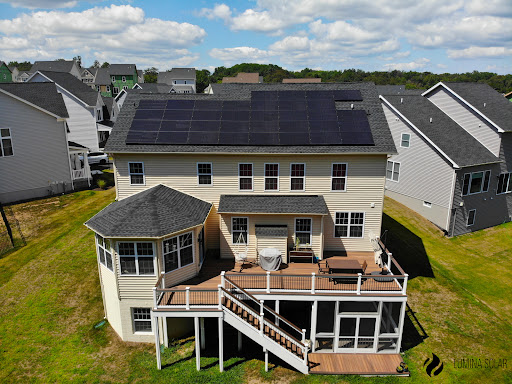
Verifying technical competence among Pennsylvania solar panel installation companies and what they offer is most dependably achieved by confirming that the solar firm holds a current NABCEP accreditation. This designation serves as the gold standard for proficiency in solar photovoltaic system layout and installation, ensuring that the technician holds the rigorous training required to manage complex electrical configurations securely and efficiently. Because the caliber of your system’s long-term performance is directly tied to the skill of the individuals on your roof, relying on nationally recognized qualifications rather than marketing promises is essential.
“The Commonwealth of Pennsylvania does not maintain a list qualified solar energy installation companies.” — pa.gov
When you assess the technical qualifications of a prospective partner, you should examine the specific markers of professional rigor detailed below:
- NABCEP License: Ensures the lead designer or technician has passed a comprehensive examination on safety and system efficiency standards.
- Internal Training Protocols: Ensures that all field staff receive ongoing education regarding evolving electrical codes and equipment improvements.
- Manufacturer Authorization: Indicates that the solar vendor has completed specific training programs mandated by equipment brands to retain full product warranty qualification.
- Project Portfolio Depth: Displays a validated track record of handling installations comparable to yours, such as complex roof pitches or integrated energy storage unit setups.
Before executing a contract, request the specific certification ID number for the lead technician assigned to your project and confirm its validity through the official national database.
Does Your Solar Panel Installation Require The $7,000–$18,000 Battery Storage Add-On Cost?
A $7,000–$18,000 battery storage extension cost is the fiscal commitment you must make if you intend to move beyond simple NEM and achieve energy independence. While a standard solar panel installation lowers your monthly utility bill, the inclusion of a battery storage system permits you to capture excess generation for use during evening hours or grid outages. When investigating Pennsylvania-based solar panel installation companies to consider, you should clarify whether their quoted system price includes the hardware and labor required for battery integration, as these costs vary significantly based on the capacity and chemistry of the units chosen.
“Pennsylvania's new GRID Standards may push data center developers toward cleaner backup power, and battery energy storage systems (BESS) are emerging as a viable alternative to diesel generators.” — hh-law.com
Integrating a battery into your design alters how you control your home's energy profile. Consider the following functional distinctions when determining if this upgrade is necessary for your specific needs:
| Feature | Solar Without Battery | Solar With Battery |
|---|---|---|
| Grid Reliance | Elevated imports power at night | Low (Uses stored energy) |
| Outage Capability | System shuts down | Provides backup power |
| Energy Management | Passive net metering | Active load shifting |
Before concluding your contract, request a detailed breakdown of the round-trip efficiency ratings and the expected cycle life of the particular battery model proposed by your solar firm to ensure it matches your long-term energy goals.
Does Your House Qualify For A Professional Solar Panel Installation In Pennsylvania?
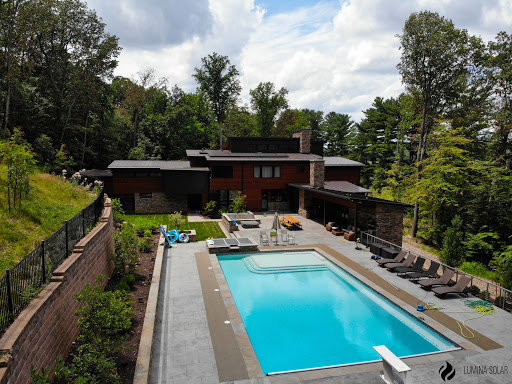
Your property is suitable for solar setup when your roof orientation, structural capacity, and shading profile align to maximize energy production in the local climate. While you may question who are the top solar system installation companies in Pennsylvania to evaluate your specific roof, the fundamental physics of site suitability remain consistent regardless of the contractor. Ideally, your installation should occupy a south-facing roof plane with a pitch between 15 and 40 degrees to capture the most powerful solar radiation throughout the year.
“Equipment shall impose no more than a 45 pounds per square foot (psf) point load in any location.” — phila.gov
You must evaluate several physical variables before committing to a project, as these factors directly govern the long-term yield of your system:
- Orientation: True south provides the highest annual output, though east and west orientations remain viable with only modest production losses.
- Shading: Trees, chimneys, and adjacent structures create shadows that substantially degrade performance, necessitating a professional site survey to map potential obstructions.
- Structural Load: Your roof must support the dead load of the racking and panels, which often necessitates an inspection of the rafters or trusses.
- Roof Condition: Because a PV installation is a long-term commitment, you should ensure your roof surface has sufficient remaining lifespan to avoid expensive removal and reinstallation costs during a future roof replacement.
Ask for a detailed shade analysis report from your prospective installer to verify that your specific roof geometry will meet your energy production goals before executing any installation contracts.

Table of Contents
- – Selecting The Best Option For Pennsylvania Sola...
- – Which Permitting And Insurance Standards Shoul...
- – How Do You Calculate Your 85–100% Annual Usage...
- – How Should You Verify The Technical Competence...
- – Does Your Solar Panel Installation Require The...
- – Does Your House Qualify For A Professional Sol...
Latest Posts
How Do Maryland Solar Panel Installation Companies Calculate Your Savings?
Managing Your Costs With Washington DC Solar Panel Installation Companies
How To Identify Unreliable Pennsylvania Solar Panel Installation Companies
More
Latest Posts
How Do Maryland Solar Panel Installation Companies Calculate Your Savings?
Managing Your Costs With Washington DC Solar Panel Installation Companies
How To Identify Unreliable Pennsylvania Solar Panel Installation Companies